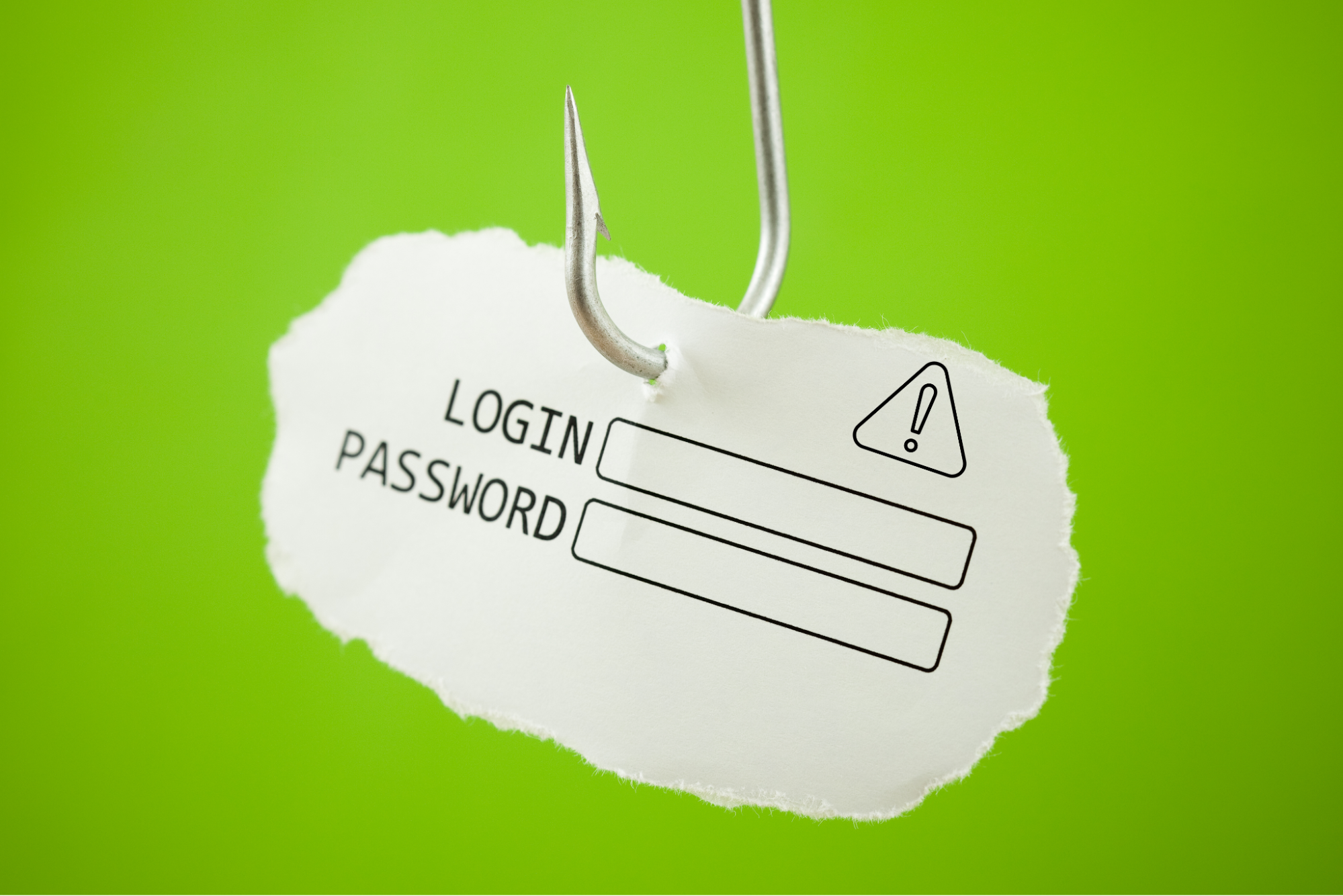
When most people think of a hacker, they imagine a technical expert in a dark room furiously coding to bypass security controls. In the modern landscape, the reality is much simpler. Many hackers use a technique called “social engineering” to trick employees into giving them the credentials they need to access confidential data and systems. Every day, your team is exposed to hundreds of emails, calls, texts, and even QR codes. Most are harmless, but just one click on the wrong message can cripple your small business.
Think of it like this: instead of trying to pick a high-tech deadbolt on your front door, a hacker simply convinces you to hand over the keys. By using urgency, pressure, and an air of authority, hackers trick employees into sending money, sharing confidential information, or even entering login credentials.
The Evolution of Phishing
If your team still thinks the telltale sign of a phishing scam is bad grammar or misspelled words, they are prepared for a threat that no longer exists. Today’s attackers have leveraged AI to move far beyond basic spam:
- Beyond the Inbox: Scams have expanded into Smishing (text messages pretending to be a CEO or a bank), Vishing (voice calls impersonating a legitimate actor), and Quishing (malicious QR codes placed over legitimate ones).
- Deepfakes: Attackers now use AI to clone voices and generate flawless, professional messages that are indistinguishable from real business correspondence. In the case of vishing, all it takes is three seconds of a video or voice recording to achieve a realistic fake.
- Business Email Compromise (BEC): This is one of the most financially damaging threats. An attacker gains access to the legitimate email account of a vendor, and then requests urgent wire transfers, or sends new, fraudulent payment instructions.
The Myth of Being “Too Small” to Target
As we’ve discussed before, small businesses are no longer overlooked. To a hacker, a large corporation is like a house with a professional security system, a fence, and a guard dog. A small business, however, is often the equivalent of an unguarded garage down the block. Sure it might not have the most expensive contents, but thieves will break in nonetheless if it’s easy and success is likely. With AI drastically lowering the cost for hackers to create compelling phishing attacks, SMBs have become desirable, high-volume targets.
The Risk of the “Human Element”
Regardless of your budget for security software, a huge portion of your risk ultimately rests on the decisions your employees make every day. According to the Verizon 2025 Data Breach Investigation Report:
the “human element” accounted for 60% of breaches
This means that more than half of all breaches may start with one person making one small mistake.
Lower Your Risk with Practical Education
A proven (and low cost) way to reduce your risk is through targeted education. We’ve developed a concise and engaging training module specifically for SMBs. We know you may not have a dedicated security person, so we’ve stripped out the jargon and focused on the practical guidelines you and your team can learn and implement today.
Check out this sample of our video on phishing and social engineering:
Once your team understands the modern warning signs of a scam, they stop being liabilities, and become important parts of your security protection layer.
By signing up for a free Stronta account, your team gains access to the full video curriculum:
Make your Team your Strongest Defense
Don’t let your team be the weakest link. Empower them with proactive cybersecurity awareness training that stays ahead of AI cyber threats. Learn more about employee security training, phishing simulation, and how to build a resilient cyber culture for your organization.
Frequently Asked Questions
Q: Why would a hacker target my small business instead of a big corporation? A: Think of it like a neighborhood: a thief might skip the house with armed guards and high fences (big corporations) to hit 50 houses with unlocked back doors (small businesses). Hackers use AI to automate attacks, meaning they can target thousands of small businesses at once with near-zero extra effort.
Q: Can’t my email provider (like Gmail or Outlook) just block these for me? A: They block millions of “spam” emails every day. However, AI allows scammers to create unique, “clean” emails that don’t contain the typical technical triggers or bad language that filters look for. Your team is the final—and most important—filter.
Q: What is “Quishing” and should I be worried about it? A: Quishing is QR code phishing. Scammers place fake QR codes on everything from parking meters to fake invoices. When scanned, they lead to a legitimate-looking login page designed to steal your credentials. Always preview the URL before opening a scanned link.
Q: Is cybersecurity training expensive for a small team? A: It is far less expensive than a data breach. Many modern solutions offer flexible, “per-user” pricing or trial periods so you can train your team on the specific threats—like AI phishing and social engineering—that matter most in 2026.